Introduction
Look, I’ve tried and experimented with more supplements than your average Joe. I’ve been the guinea pig so you don’t have to be.
That said, I’m nowhere near the level of legends like Andrew Huberman, Bryan Johnson, or Gary Brecka. These guys are contributing to humanity’s longevity revolution through their internet presence, while I’m just a person who’s spent way too much money at the supplement store.
But here’s the thing: I’ve learned a lot through trial, error, and occasionally questioning my life choices while choking down chalky powders. So I figured why not share what I’ve learned and save you some time, money, and regret? Think of this as your shortcut: a supplement guide written by someone who’s already made the mistakes, read the studies at 2 AM, and lived to tell the tale.
Before we go deeper, I want to show you how I think about all of this. I've created two diagrams that map out my entire mental model for supplements—from your basic multivitamin to the weird stuff that sounds like it should be illegal
Note: I've added only those supplements which are approved or currently getting approved by the FDA.
Diagram 1: The Iceberg Meme
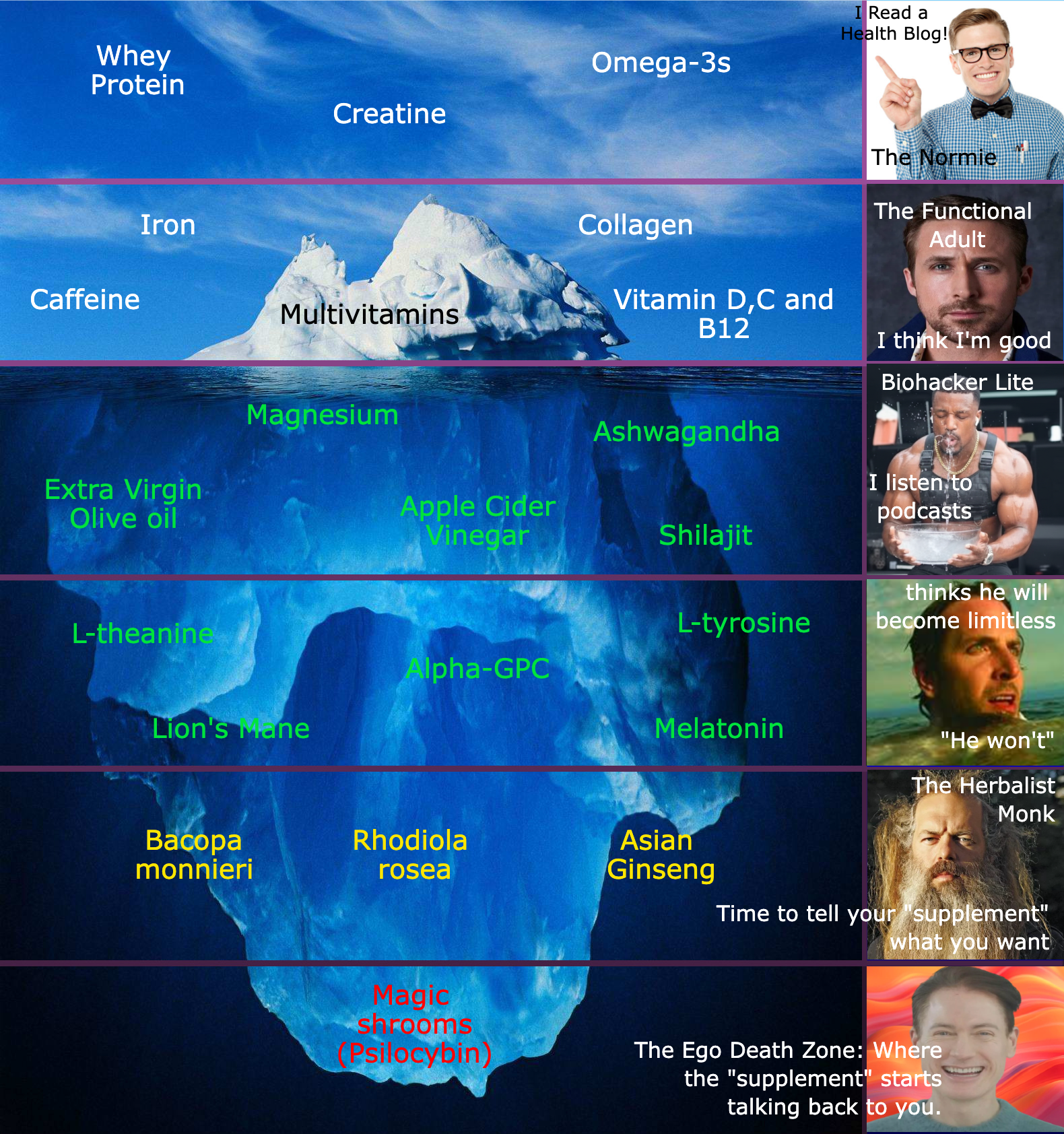
This is a classic "iceberg meme" format that categorises health supplements and substances based on how mainstream or obscure they are. Think of it as a visual representation of the biohacking rabbit hole you're about to fall down.
Diagram 2: The Classification System
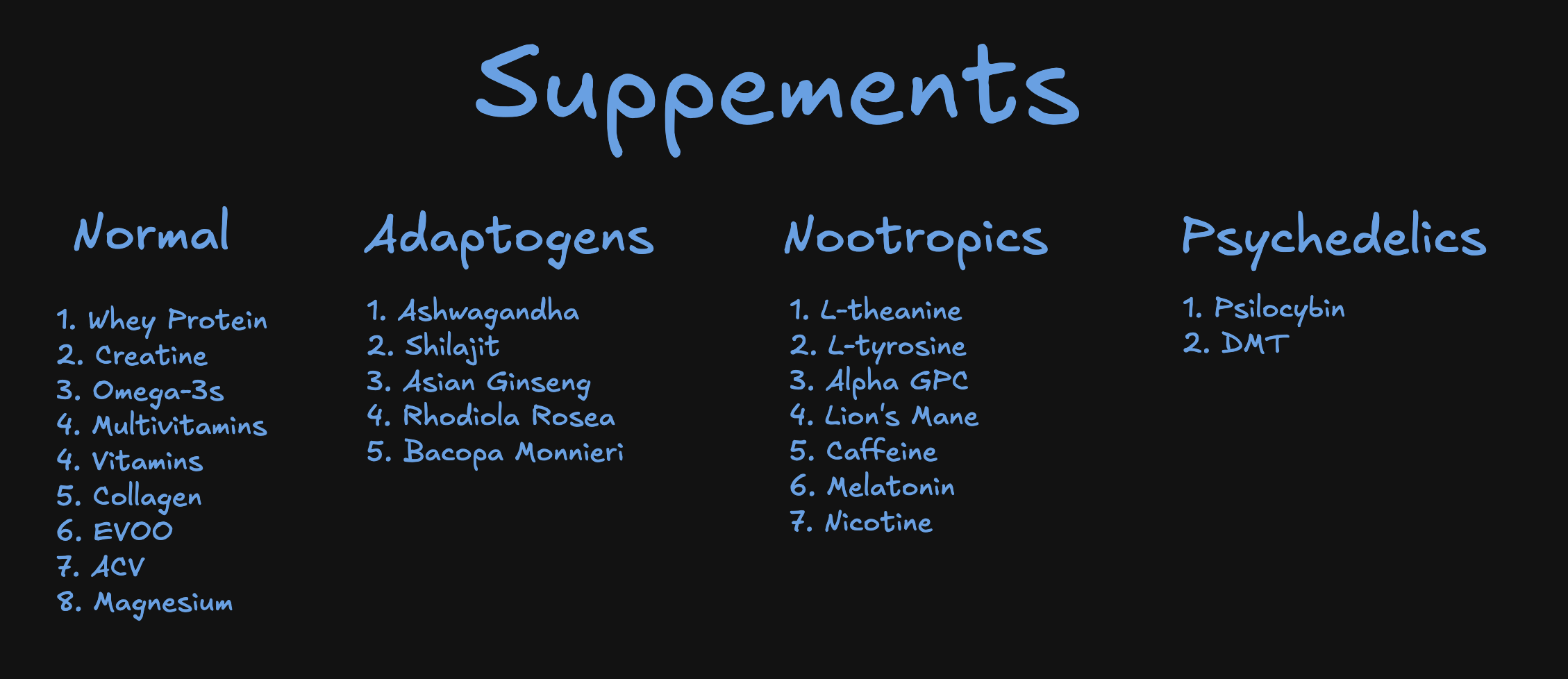
This one's simpler a straightforward categorization of everything
Category 1: The Essentials
These are the supplements I genuinely believe almost everyone should take daily. Your grandma, your gym-bro roommate, your desk-job colleague who thinks walking to the coffee machine counts as cardio—this section is non-negotiable.
In fact, consider this your mission: convince your parents to take at least some of these. It’s harder than it sounds. My personal victory? After years of battling supplement skepticism, my parents finally caved.
These are people who once genuinely believed whey protein was indigestible and would just sit in your stomach for four years like dairy cement. I wish I was joking.
1. Protein Powders
Muscle isn’t just for aesthetics, it’s a glucose sink, hormone regulator, and a major longevity marker.
Protein provides essential amino acids, especially leucine, which triggers muscle protein synthesis via mTOR. Aging, sedentary lifestyles, and vegetarian diets can drastically reduce both protein quality and total intake.
- Whey isn’t required, but it’s the most efficient and digestible protein source.
- If you consistently hit ~1.2–1.6 g/kg/day from whole foods, whey becomes optional.
Personally, I’ve tried many brands; both whey and plant-based—and I’ll say this: unless you’re a masochist, stick to whey. Plant-based powders tend to be grainy, bitter, and deeply unpleasant.
2. Creatine
Creatine increases phosphocreatine stores in muscles, improving ATP regeneration and your cell’s emergency energy battery.
Benefits:
- Increased strength and muscle
- Improved cognitive performance (especially when sleep-deprived)
- Potential neuro-protective effects
Creatine isn’t just a “gym bro” supplement, it’s a legitimate cellular energy buffer for both the brain and body.
Stick to unflavored. Flavored creatine is Russian roulette for your taste buds. I’m currently suffering through a tub of Candy Rush flavor bought during a moment of overconfidence. Every morning I stare at it and whisper, “Why?” But I paid for it—so I drink it. Learn from my mistakes.
3. Omega-3s (EPA/DHA)
Omega-3s are structural fats essential for your brain, retina, and cell membranes. They Reduce inflammation, Improve cardiovascular health, Support cognitive function. Modern diets are overloaded with omega-6 fats (thanks, vegetable oils), creating chronic low-grade inflammation.
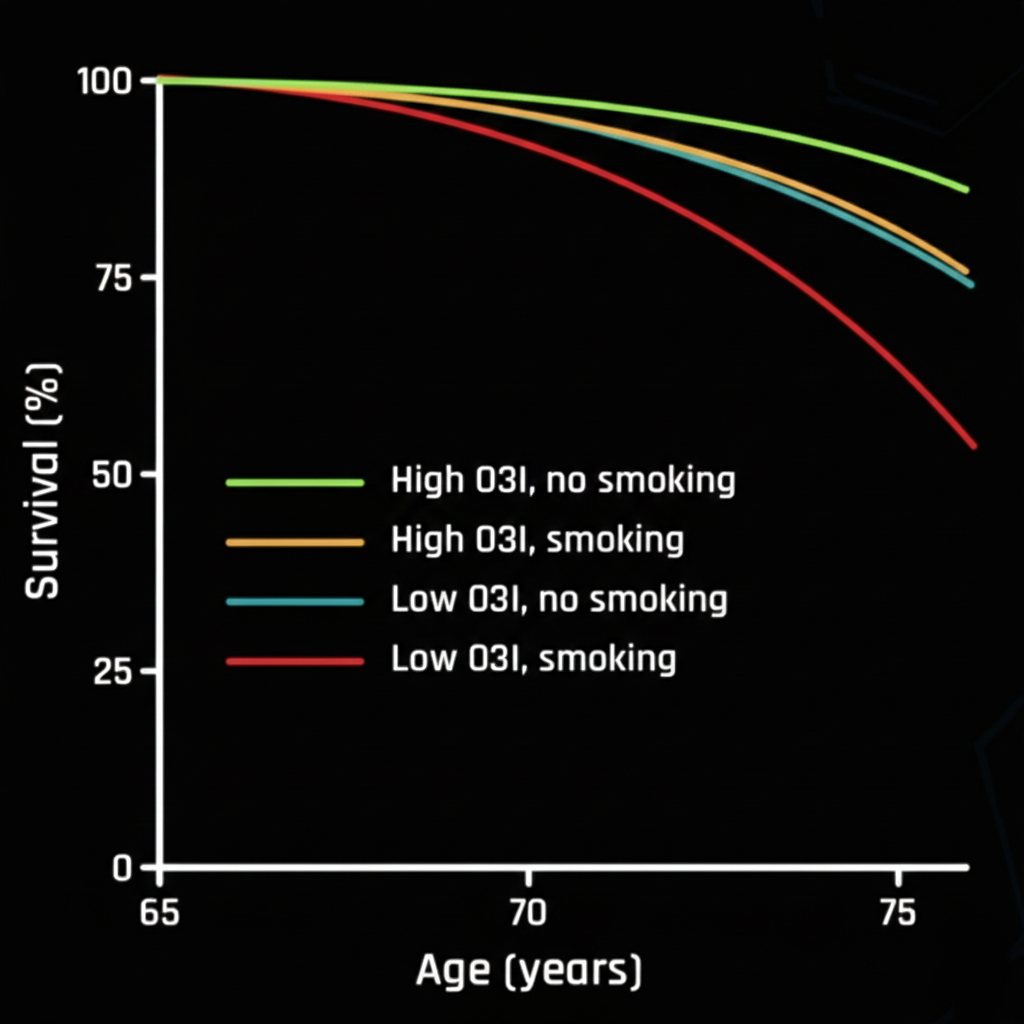
Interesting study insight:
Participants were divided into four groups:
- Smokers
- Non-smokers
- Smokers taking omega-3s
- Non-smokers taking omega-3s
Shockingly, smokers who supplemented omega-3s had similar longevity to non-smokers who didn’t supplement.
Your brain is ~60% fat. Give it the good stuff.
Dose: 1–2 g combined EPA + DHA daily.
4. Magnesium
Magnesium is a cofactor in 300+ enzymatic reactions, including:
- Sleep quality
- Insulin sensitivity
- Muscle and nerve relaxation
- Stress resilience (HPA axis regulation)
Most magnesium is stored in bones, so deficiency is often invisible in blood tests. Deficiency is extremely common. Estimates suggest around 60–70% of people in India and 50–60% in the USA are not getting enough magnesium. Caffeine, alcohol, stress, and sugar all deplete magnesium. So yes—basically everyone needs it.
Best form: Magnesium Glycinate as it is highly absorbable and easy on the gut (unlike Magnesium Oxide)
Taking it ~1 hour before bed dramatically improves sleep quality. I’m actively working on convincing my father to add this to his stack—fatherhood burns magnesium faster than you can say responsibility.
5. Collagen + Vitamin C
This one I stole/learned from the ladies. Men, we need to get our skin game together. Collagen isn't just for your girlfriend's morning smoothie; it's legitimately important for all of us.
Benefits:
- Skin integrity
- Joint health
- Gut lining repair
- Tendon and ligament support
Collagen provides glycine, proline, and hydroxyproline, but Vitamin C is required for actual collagen synthesis.
6. Extra Virgin Olive Oil (EVOO)
I was intrigued with Bryan Johnson’s obsession with EVOO until I drank roughly two litres of it over a few months. At that point, I kind of got it.
EVOO is rich in polyphenols like oleuropein and hydroxytyrosol, compounds that improve lipid profiles, reduce inflammation, and support longevity-related pathways in the body. It’s no coincidence that it sits at the center of the Mediterranean diet, one of the most reliable longevity models we have. Those Italian nonnas aren’t living to 100 by accident.
Quality really matters here. Real EVOO has a distinct peppery, slightly spicy kick in the throat. If it tastes smooth and bland, there’s a good chance it’s been adulterated.
As for how to take it, you have options. You can drizzle it on salads and meals like a normal person, or you can go full Bryan Johnson mode and drink about 10–15 ml straight.
Is it a little weird? Sure. Does it work? Absolutely.
Category 2: Common Deficiencies
Modern lifestyles—sedentary jobs, low sunlight, poor nutrition—leave many people deficient.
(To be Continued, I am still writing...)